
O que é uma lanterna EDC zoomable?
Uma lanterna EDC zoomável é uma luz compacta de transporte diário com uma estrutura óptica ajustável que permite aos usuários alternar entre um feixe de inundação mais amplo para iluminação em áreas curtas e um feixe de pontos mais estreito para observação a longa distância. Esse design muda a forma como a luz é usada em viagens, acampamentos, transporte de veículos e transporte diário. Requer uma estrutura de foco estável, modos práticos de feixe e um projeto adequado de bateria. C6 é um exemplo de lanterna EDC compacta zoomável com modos de saída tanto de holofote quanto de holofote. Compradores B2B devem avaliar tanto a função óptica quanto a consistência de fabricação antes de desenvolver essa categoria, pois o desempenho de foco ajustável depende do movimento da lente, qualidade do feixe, vedação, compatibilidade da bateria e montagem repetível.
Por que o design zoomable importa no porte diário
Muitos usuários acham que uma lanterna com zoom é útil simplesmente porque ela pode deslizar de uma inundação para outra. Isso é apenas parte da história. No porte diário real, o produto também deve caber em um bolso, parecer estável na mão, manter o feixe utilizável em ambas as posições e manter o movimento de foco após operações repetidas.
Uma lanterna EDC de feixe fixo é frequentemente projetada em torno de uma prioridade óptica. Pode fornecer um feixe de inundação amplo para visibilidade de curta distância ou um feixe mais apertado para visão mais longa. Ambas as abordagens podem ser válidas. O desafio surge quando uma luz compacta precisa suportar múltiplas situações, como iluminação de mochila, suporte doméstico, suporte para acampamento, uso de viagens e tarefas de emergência com veículos.
Uma lanterna EDC com zoom pode melhorar a adaptabilidade, mas também apresenta riscos mecânicos. Estruturas deslizantes podem se soltar de forma desordenada, permitir movimentos indesejados, afetar a vedação ou criar padrões de vigas irregulares quando o processo de projeto e fabricação não são controlados. Portanto, compradores B2B devem tratar o zoom como uma questão de design óptico e estrutural, e não apenas como um recurso de vendas.
O que faz uma lanterna EDC com zoom ser diferente?
ALanterna EDC zoomávelutiliza uma lente de foco telescópica ou uma estrutura óptica ajustável para alterar o formato do feixe. No modo de inundação, o feixe se espalha mais para visibilidade em áreas de curta distância. No modo spot, o feixe se torna mais concentrado para visão mais distante.
Ao contrário de uma lanterna grande para uso público, um modelo EDC deve permanecer acessível ao bolso. Comprimento, diâmetro da cabeça, peso, textura da empunhadura e funcionamento do interruptor afetam se os usuários realmente carregarão o produto. Se a estrutura ajustável tornar a luz volumosa ou instável, a função de zoom pode reduzir o valor diário.
A compatibilidade com baterias também pode melhorar a adaptabilidade do mercado. Uma lanterna de foco portátil ajustável que suporta tanto uma bateria de lítio 14500 quanto uma bateria AA pode atrair usuários que desejam desempenho recarregável, além de fácil substituição local da bateria. Material, vedação e estrutura deslizante ainda precisam ser controlados para uso repetido.
Uma lanterna com zoom não é apenas uma ideia óptica. Também é um produto mecânico, pois o movimento de foco deve permanecer estável após operações repetidas.
Estudo de Caso C6: Uma Lanterna EDC de Bolso Zoomável 800LM
C6 é umLanterna EDCproduto posicionado como uma lanterna compacta e zoomável EDC para porte diário, iluminação de viagem, suporte para acampamento, emergência veicular, iluminação para mochilas e linhas de produtos distribuidores EDC. Não deve ser descrita como uma luz tática para armas, luz de mergulho, luz UV, produto laser, dispositivo médico ou luz industrial pesada.
O modo alto de holofote 800LM é adequado para iluminação em áreas de curto alcance, suporte para acampamento, checagem de veículos e backup doméstico. O modo de holofote alto 230LM, combinado com um alcance máximo de 221 metros, é mais adequado para observação de média distância, onde um feixe concentrado é útil.
Os modos baixos também importam. Spotlight Low 3LM e Floodlight Low 10LM podem suportar tarefas de curta distância onde alta potência criaria reflexão desnecessária ou consumo de bateria. Os modos estroboscópicos devem ser posicionados como funções de visibilidade ou emergência, não como recursos de uso agressivo.
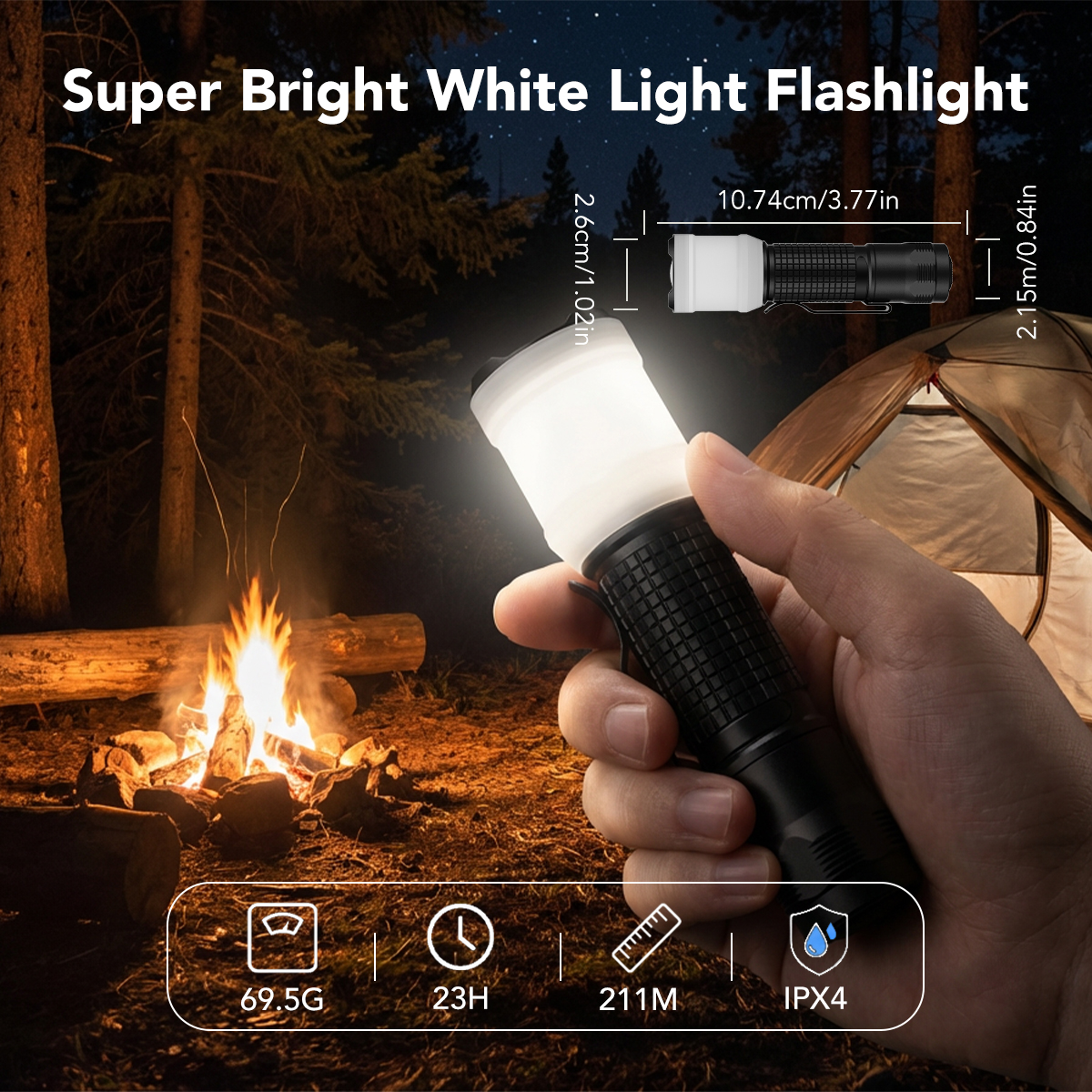
O C6 utiliza tonalidade 8000K–9000K e possui corpo compacto de φ26mm cabeça de lâmpada × φ21,50mm de cauda × 95,10mm de comprimento total. Seu peso de 69,5g, incluindo bateria, permite uso acessível ao bolso. O corpo de liga de alumínio 6063 e o acabamento anodizado preto ajudam a dar ao produto uma sensação de uso diário mais forte do que as alternativas plásticas básicas.
Seu grau impermeável IPX4 se adapta diariamente a respingos e exposição leve ao ar livre, mas não deve ser descrito como classificado para mergulho, IPX8, IP67 ou adequado para uso em águas profundas.
Holofote vs Holofote: O que os compradores realmente devem comparar?
Os modos de holofote e holofote não são reivindicações concorrentes; Eles suportam diferentes tarefas de usuário. Refletores oferecem cobertura mais ampla em campo próximo, o que pode ser útil dentro de uma barraca, ao lado de um veículo, ao redor de uma mochila ou durante uso doméstico de reserva. O Spotlight oferece visibilidade mais concentrada à distância, o que pode ajudar os usuários a inspecionar um caminho, quintal, borda de acampamento ou objeto de alcance médio.
O comprador deve perguntar como cada modo será usado, não apenas qual número é maior. No C6, a Máxima de Refletor é 800LM e a Máxima de Holofote é 230LM. Isso não significa que um modo seja melhor que o outro. Isso significa que as duas posições ópticas cumprem funções diferentes de iluminação.
O C6 não deve ser posicionado como um holofote profissional de longo alcance. Ela é melhor entendida como uma lanterna zoom portátil que oferece aos usuários de EDC mais flexibilidade de feixe dentro de um formato compacto.
Por que a compatibilidade entre 14500 e bateria AA pode melhorar o ajuste no mercado
A compatibilidade de baterias é um recurso prático de planejamento de produtos para viagens, backup de emergência e distribuidores. Uma bateria de lítio 14500 suporta posicionamento de produtos recarregáveis e uso de EDC de maior desempenho. A compatibilidade com baterias AA pode ajudar os usuários a encontrar energia de reposição com mais facilidade em lojas locais, ambientes de viagem ou kits de emergência.
O C6 suporta 1 unidade de bateria de lítio 14500 / 750mAh / 3,7V ou 1 unidade de bateria AA. Isso o torna relevante para mercados onde os usuários podem valorizar tanto o desempenho recarregável quanto a simples substituição da bateria. Para os distribuidores, isso pode ampliar a história do produto além de um único formato de bateria.
A compatibilidade com duas baterias ainda deve ser tratada com cuidado. O projeto elétrico, orientação da bateria, estrutura de contato, limites de tensão, linguagem de embalagem e instruções do manual do usuário devem ser claros. Compradores B2B não devem tratar a compatibilidade de baterias como uma simples etiqueta; Faz parte da segurança do produto, educação do usuário e clareza pós-venda.
Lanterna EDC Zoomável vs Lanterna EDC de Feixe Fixo
Uma lanterna EDC com zoom e uma lanterna EDC de feixe fixo podem ser valiosas. A escolha correta depende do cenário do usuário, prioridade óptica, complexidade mecânica, planejamento da bateria e posicionamento do produto.
| Fator de Seleção | Lanterna EDC Zoomable | Lanterna EDC de feixe fixo | Leitura do Comprador |
|---|---|---|---|
| Ajuste de feixe | Permite que os usuários alternem entre posições de inundação e spot. | Utiliza um perfil de viga projetado. | A ajustabilidade só ajuda quando os usuários precisam de ambos os tipos de feixe. |
| Uso a curta distância | O modo de enchente pode melhorar a cobertura das áreas próximas. | Pode ser excelente se projetado para saída de inundação ou balanceada. | Ajuste a largura da viga à tarefa real. |
| Visualização à distância | O modo spot pode suportar visualizações mais concentradas a meia distância. | Depende do design da óptica fixa e do refletor. | A distância do feixe ainda depende da execução óptica. |
| Complexidade mecânica | A estrutura de foco deslizante adiciona requisitos mecânicos. | Menos peças ópticas móveis. | Produtos zoomables exigem uma revisão estrutural mais rigorosa. |
| Estrutura de vedação | As peças móveis tornam o design de vedação importante. | Pode ser mais simples dependendo do design do corpo. | As alegações de impermeabilidade devem corresponder à estrutura real. |
| Transporte no bolso | Deve permanecer compacto apesar do foco telescópico. | Pode otimizar o tamanho em torno de um layout óptico. | O valor do EDC depende do conforto real de transporte. |
| Curva de aprendizado do usuário | Os usuários precisam saber quando usar inundação ou spot. | Geralmente é mais simples de explicar. | A embalagem deve explicar claramente a função do feixe. |
| Planejamento de baterias | Pode usar compatibilidade com duas baterias para maior flexibilidade no mercado. | O formato da bateria depende do tamanho e do usuário-alvo. | A escolha da bateria afeta a produção, a disponibilidade e a educação do usuário. |
| Requisitos de inspeção | Precisa de viga, estrutura deslizante, vedação e checagem de bateria. | Foca em consistência de feixe, eletrônica e estrutura. | A inspeção deve corresponder à complexidade do produto. |
| Posicionamento de produtos B2B | Lanterna portátil flexível com zoom para viagens, canais de backup e EDC. | Simples, estáveis e frequentemente mais fáceis de posicionar no estilo de viga. | Nenhuma das categorias é automaticamente melhor para todas as linhas de produtos. |
O que os compradores B2B devem perguntar antes de desenvolver uma lanterna EDC zoomable?
Compradores B2B não devem escolher uma lanterna com zoom apenas porque o recurso parece atraente. Um produto bem-sucedido deve corresponder a hábitos reais de transporte, distância de uso, disponibilidade da bateria, durabilidade mecânica, explicação da embalagem e posicionamento alvo de varejo. Essas oito perguntas ajudam a estruturar umFabricante de lanternas ODM EDCDiscussão antes da produção.
Qual cenário de usuário precisa de foco ajustável?
Comece com casos de uso reais, como viagens, emergências de veículo, suporte para acampamento ou apoio doméstico. O foco ajustável deve resolver um problema prático do feixe, em vez de existir apenas como um rótulo de características.
O produto deve priorizar holofotes, holofotes ou uso equilibrado?
Defina o valor principal antes de finalizar a óptica. Alguns usuários precisam de inundação de campo próximo, enquanto outros valorizam um local mais concentrado para visualização de média distância.
Quão estável é a estrutura telescópica de foco?
O mecanismo deslizante deve parecer controlado e durável. Os compradores devem analisar a folga, resistência ao movimento, tolerância à montagem e comportamento de manuseio a longo prazo.
O formato do feixe é aceitável em ambos os modos?
Um produto útil com zoom deve ter comportamento prático do feixe em posições de inundação e spot. Os compradores devem solicitar fotos do feixe, critérios de inspeção e descrições de casos de uso.
Qual formato de bateria se encaixa no mercado-alvo?
Uma bateria de lítio 14500 pode suportar posicionamento recarregável, enquanto a compatibilidade AA melhora a conveniência da substituição. A história da bateria selecionada deve corresponder ao canal e aos hábitos do usuário.
A estrutura de vedação suporta uso externo?
Peças móveis de foco tornam o design de vedação mais importante. O IPX4 pode ser adequado para respingos diários e exposição leve ao ar livre, mas não deve ser superestimado como proteção para mergulho ou em águas profundas.
Como a embalagem deve explicar o zoom e a compatibilidade da bateria?
A embalagem deve explicar claramente o uso de enchentes e spots, as opções de bateria e os limites de aplicação. Isso ajuda os usuários a entender o produto e reduz a confusão pós-venda.
O fabricante pode dar feedback do ODM antes da produção?
Um projeto personalizado de lanterna EDC deve ser revisado quanto à estrutura óptica, mecanismo deslizante, compatibilidade da bateria, design da carroceria de alumínio, embalagem e fabricabilidade antes da produção em massa.
Como a SHENGQI LIGHTING Apoia Projetos ODM com Lanternas EDC Zoomáveis
ILUMINAÇÃO SHENGQIé a marca Dongguan Shengqi Lighting Technology Co., Ltd., com raízes na indústria que remontam a 1981. A Dongguan Shengqi Lighting Technology Co., Ltd. foi formalmente fundada em 2008. A empresa foca em lanternas, produtos de iluminação portáteis e serviços de fabricação OEM/ODM.
A empresaPortfólio de produtosincluiLanternas EDC, lanternas de caneta, lanternas para uso externo, lanternas táticas, faróis, luzes de camping, luzes de caça, luzes de mergulho, luzes de ferramentas, acessórios e produtos OEM. Para produtos EDC com zoom, como o C6, o valor não é apenas a capacidade de produção. O valor é a capacidade de conectar cenários do usuário, estrutura óptica, mecanismo deslizante, compatibilidade da bateria, design da carroceria em alumínio, instruções de embalagem e fabricação repetível.
A empresa apoiaServiços OEM/ODMincluindo Design Industrial, Design de Engenharia Óptica, Design Eletrônico, Design de Embalagem, Fabricação e Testes. Suas capacidades fabril incluem cerca de 130.000 pés quadrados de espaço de fabricação, 75 máquinas CNC, uma linha de produção SMT totalmente automatizada, duas linhas de soldagem e onze linhas de montagem livres de poeira.
Para programas de lanternas EDC de alumínio, máquinas CNC suportam fabricação de carrocerias de alumínio e consistência dimensional. A linha SMT automatizada suporta montagem eletrônica, enquanto linhas de soldagem e linhas de montagem sem poeira suportam o controle de produção. Recursos de teste ajudam a avaliar a vida útil do interruptor, vibração, queda, desempenho luminoso, temperatura, comportamento em altas e baixas temperaturas, desempenho à prova d'água e comportamento da bateria. OHistórico da empresaé apoiado por um sistema ISO9001 de gestão de qualidade para a gestão organizada da manufatura.
Perguntas Frequentes
1. O que é uma lanterna EDC zoomável?
Uma lanterna EDC zoomável é uma lanterna compacta de porte diário, com uma estrutura de foco ajustável que transforma o feixe de um padrão de inundação mais amplo para um padrão de pontos mais estreito. O modo de inundação suporta iluminação de áreas de curta distância, enquanto o modo spot permite uma visão mais concentrada à distância. O design é útil quando os usuários querem uma lanterna de bolso para viagens, suporte para acampamento, apoio doméstico, emergência de veículo e transporte diário. Os compradores devem avaliar a qualidade do feixe, estrutura deslizante, sistema de bateria, vedação e conforto no bolso juntos.
2. Uma lanterna com zoom é melhor do que uma lanterna de feixe fixo?
Uma lanterna com zoom não é automaticamente melhor do que uma lanterna de feixe fixo. É melhor quando o usuário-alvo precisa tanto de iluminação de holofote em áreas próximas quanto de uma visão mais concentrada de média distância em um único produto compacto. Uma lanterna de feixe fixo pode ser mais simples, fácil de selar e mais consistente quando o caso de uso é claro. Para o planejamento de produtos B2B, a decisão deve depender do cenário do usuário, posição de preço, complexidade mecânica, requisitos de inspeção, explicação da embalagem e do papel do produto na linha EDC.
3. Qual é a diferença entre os modos de holofote e holofote?
O modo refletor espalha a luz por uma área mais ampla próxima, tornando-se útil para barracas, tarefas no lado do veículo, iluminação de mochilas, apoio doméstico e trabalho de curta distância. O modo holofote concentra o feixe de forma mais precisa para observação de média distância e ao ar livre. No C6, o Foco Máximo é 800LM, enquanto o Foco Alto é 230LM com alcance máximo de 221 metros. Os compradores não devem tratar o número maior automaticamente como algo melhor; Cada modo de feixe deve ser avaliado pelo uso pretendido.
4. Qual bateria a lanterna EDC zoomável C6 usa?
A lanterna EDC C6 zoomable suporta 1 bateria de lítio 14500 / 750mAh / 3,7V ou 1 bateria AA por 1 pc. Essa compatibilidade com duas baterias pode melhorar o ajuste ao mercado porque a 14500 de lítio suporta posicionamento de lanterna de bolso recarregável, enquanto a compatibilidade AA oferece opções de substituição mais simples em viagens, domicílios e emergências. Compradores B2B devem confirmar a orientação da bateria, projeto elétrico, limites de voltagem, linguagem da embalagem e instruções do manual do usuário antes de lançar um produto de lanterna EDC com bateria dupla.
5. O C6 é à prova d'água?
O C6 é especificado com grau impermeável IPX4 nos dados do produto usados neste artigo. O IPX4 é adequado para respingos diários e exposição leve ao ar livre, podendo atender a muitos usos para viagens, acampamentos, emergências de veículos e apoio doméstico. Não deve ser descrito como IPX8, IP67, com classificação para mergulho ou adequado para uso em águas profundas. Como o C6 utiliza uma estrutura de foco telescópica, os compradores devem revisar o design da vedação, a consistência da montagem e as instruções do produto antes de posicioná-lo para uso externo.
6. O que os compradores devem verificar ao adquirir lanternas zoomables?
Os compradores devem verificar se o usuário-alvo realmente precisa de foco ajustável, quão estável a lente telescópica de focagem se sente, se o formato do feixe é aceitável nos modos de inundação e spot, e se a estrutura de vedação suporta o uso externo pretendido. Eles também devem revisar a compatibilidade da bateria, lógica do interruptor, material, peso, explicação da embalagem e critérios de inspeção. Uma lanterna EDC zoomável é tanto um produto óptico quanto mecânico, então a consistência da produção é importante.
7. Como as marcas podem desenvolver uma lanterna EDC personalizada com zoom com a SHENGQI LIGHTING?
As marcas podem começar definindo o usuário-alvo, método de transporte, requisitos de iluminação e holofote, estrutura de foco ajustável, compatibilidade da bateria, design de carroceria em alumínio, necessidades de embalagem e marca, expectativas de impermeabilidade e requisitos de teste. A SHENGQI LIGHTING suporta projetos ODM personalizados com lanternas EDC e zoomables EDC por meio de Design Industrial, Design de Engenharia Óptica, Design Eletrônico, Design de Embalagem, Fabricação e Testes. Gerentes de produto e equipes de sourcing podem usar oPágina de contatopara discutir os requisitos do projeto.
Escolha produtos EDC Zoomables por Caso de Uso e Estrutura
ALanterna EDC zoomávelresolve a necessidade de adaptação de feixe em múltiplas distâncias e múltiplos cenários. Seu valor depende de quão bem o produto alterna entre iluminação de holofote e visualização pontual mais concentrada, permanecendo portátil, estável e fácil de entender.
A C6 demonstra essa direção por meio de uma lente de foco telescópica, Floodlight High 800LM, Spotlight High 230LM, alcance máximo de 221 metros, compatibilidade com bateria 14500 / AA, construção em liga de alumínio 6063, acabamento anodizado preto, grau impermeável IPX4, comprimento total compacto de 95,10mm e peso de 69,5g incluindo bateria.
Os usuários devem avaliar o comportamento do feixe, estrutura, bateria, grau impermeável, peso e aplicação real antes de escolher uma lanterna portátil com zoom. Marcas B2B que desenvolvem produtos EDC zoomables devem revisar durabilidade mecânica, desempenho de feixe, compatibilidade da bateria, explicação da embalagem e consistência dos lotes. A SHENGQI LIGHTING pode suportar o desenvolvimento, fabricação e teste de LEDM com LEDs portáteis e zoomables ODM para linhas de produtos civis.
Desenvolva projetos de lanternas EDC Zoomables de acordo com as necessidades reais dos usuários
Marcas de equipamentos EDC, marcas de produtos para uso externo, marcas de acessórios de viagem, kits de emergência automotivo, distribuidores, importadores, gerentes de produto e equipes de sourcing OEM/ODM podem discutir projetos de lanternas EDC zoomables, estrutura de foco ajustável, planejamento de iluminação e holofotes, seleção de compatibilidade de baterias, design de carroceria de alumínio, embalagem e branding, desenvolvimento, fabricação e testes de ODM com SHENGQI LIGHTING.
Para comunicação com projetos, você também pode entrar em contato com a equipe por e-mail emsales@shengqilight.com.